"Language is a map of a culture. It tells you where its people come from and where they are going." — Rita Mae Brown.
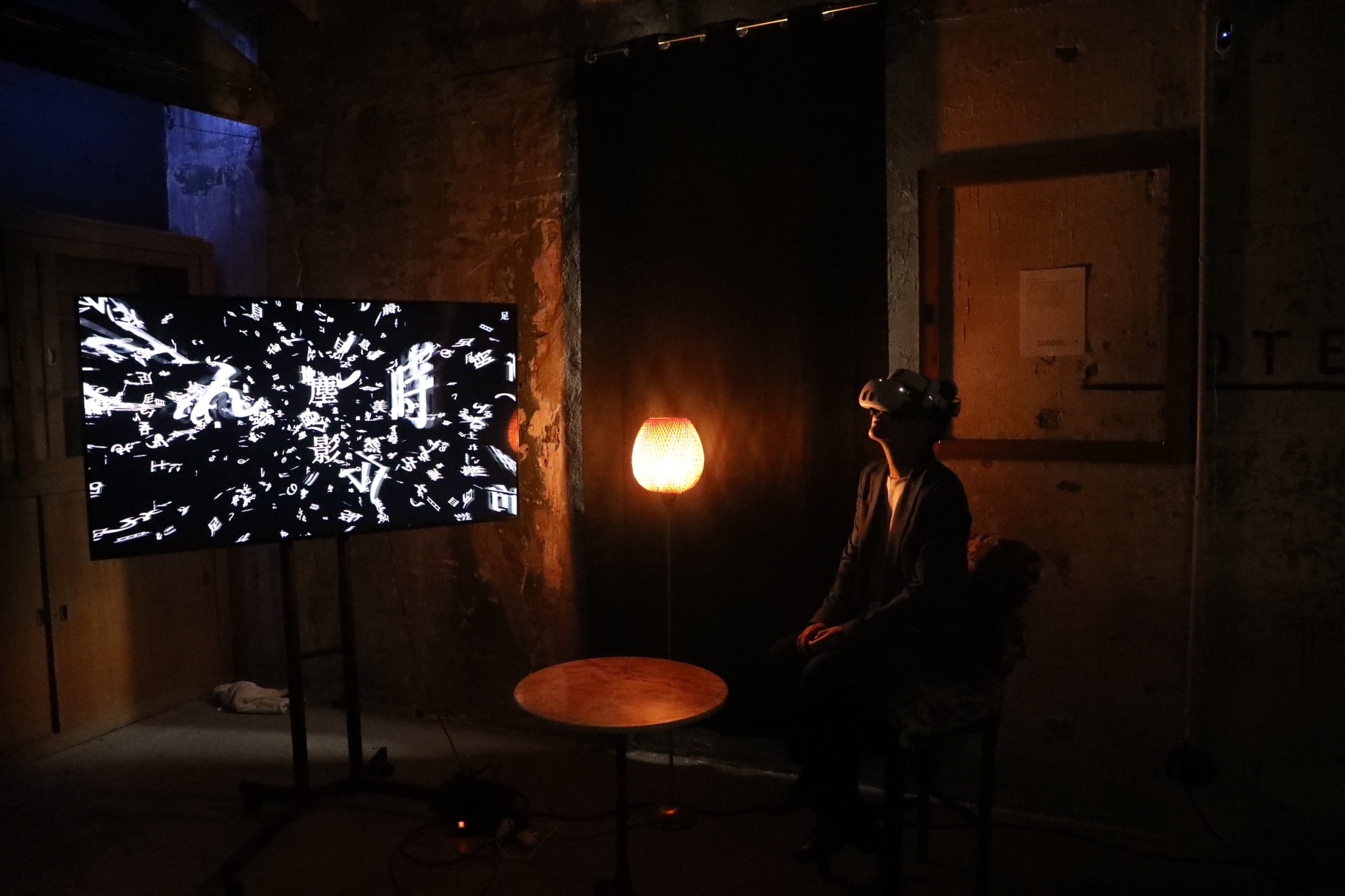
How can words capture the unspoken meanings that lie beyond language? And how does language construct our perspective of the personal world? The work "Dust Shadows" is a VR-mediated virtual reality art piece that seeks to observe the multifaceted nature of the island of Taiwan through the lenses of different nations and cultural backgrounds. Whether they are Taiwanese or viewers from Spanish and Portuguese cultures, each brings their own cultural experiences and memories into the work, redefining the imagery of this land. This interwoven way of seeing not only enriches the emotional connection to the Taiwanese soil but also prompts viewers to reflect on how their own cultures shape their perceptions.
By transforming familiar scenes into waves of text, it beckons the audience to re-examine the very essence of the everyday
"Dust Shadows" uses diverse lenses to deconstruct imagery of Taiwan into textual fragments. In this work, language is more than a tool—it’s an emotional carrier. Spanish viewers might be drawn to the colorful street scenes, while Portuguese audiences might find echoes of their seafaring past. For locals, the work reflects the familiar pieces of everyday life. By utilizing AI, the piece turns people and objects into a world made of words. These textual waves move forward like drifting dust before finally disappearing, symbolizing the fleeting nature of memory. This process of vanishing invites viewers to consider how memories are reshaped across cultures and how, in our digital era, personal experiences are converted, saved, and eventually lost.